Cinder block size: 8 × 8 × 16 (7⅝ × 7⅝ × 15⅝)
A standard cinder block is 8 × 8 × 16 in by name and 7⅝ × 7⅝ × 15⅝ in for real, leaving room for a ⅜ in mortar joint. Every block size in one chart.
 By the TapePal teamUpdated 4 min read
Short answer
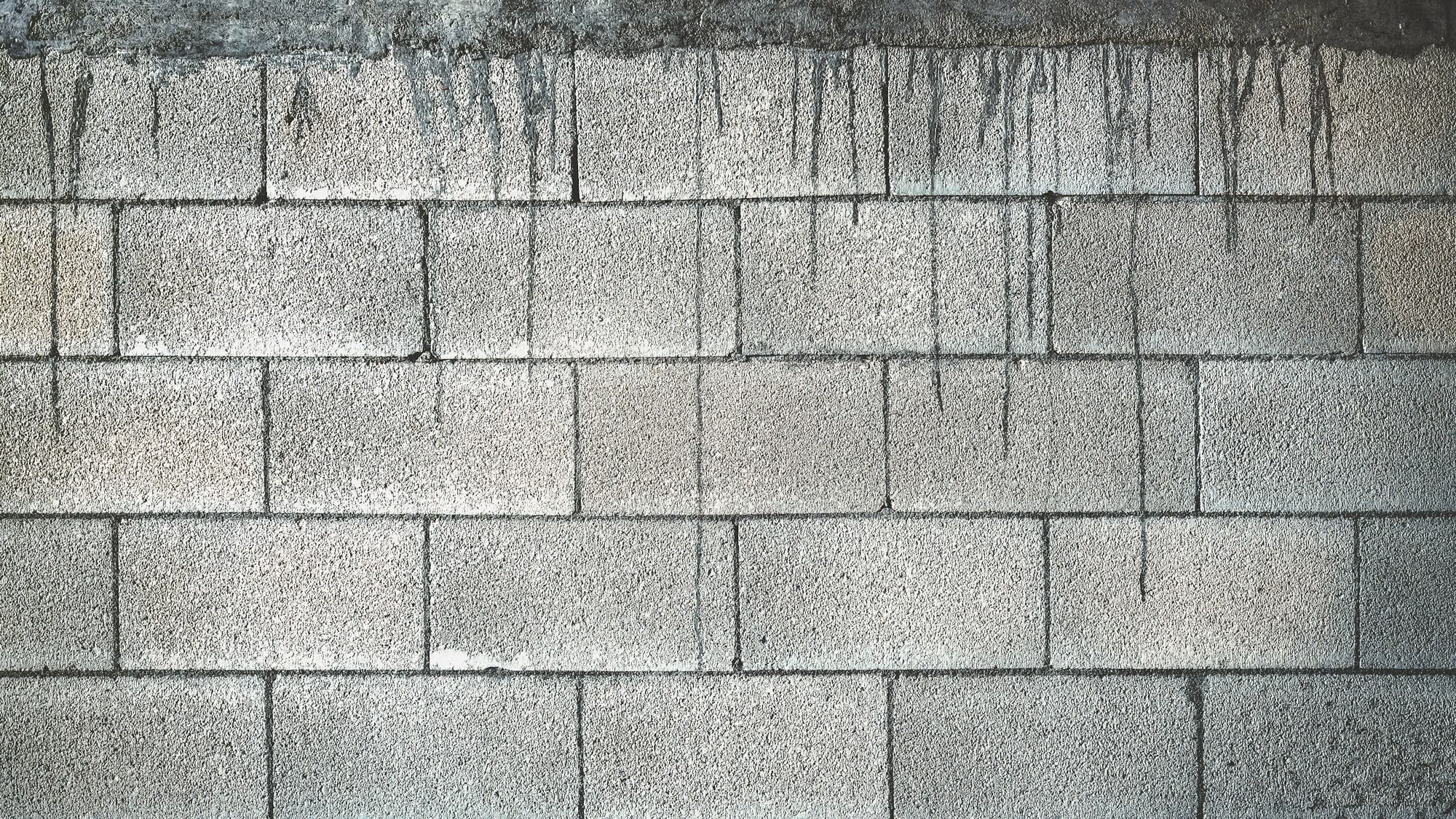
8 × 8 × 16 in is the standard cinder block size by name. The block itself is 7⅝ × 7⅝ × 15⅝ in, ⅜ in smaller each way, so that with a ⅜ in mortar joint it takes up exactly 8 × 16 in of wall (NCMA standard sizes).
What size is a standard cinder block?
The standard block is called 8 × 8 × 16 and measures 7⅝ × 7⅝ × 15⅝ in. Every common size follows the same rule: ⅜ in smaller than its name in each direction.
| Name size | Actual size | Used for | cm |
|---|---|---|---|
| 4 × 8 × 16 | 3⅝ × 7⅝ × 15⅝ in | Partition walls, veneer | 9.2 × 19.4 × 39.7 |
| 6 × 8 × 16 | 5⅝ × 7⅝ × 15⅝ in | Interior and garden walls | 14.3 × 19.4 × 39.7 |
| 8 × 8 × 16 | 7⅝ × 7⅝ × 15⅝ in | The standard block: foundations, walls | 19.4 × 19.4 × 39.7 |
| 10 × 8 × 16 | 9⅝ × 7⅝ × 15⅝ in | Taller and retaining walls | 24.4 × 19.4 × 39.7 |
| 12 × 8 × 16 | 11⅝ × 7⅝ × 15⅝ in | Basements, retaining walls | 29.5 × 19.4 × 39.7 |
| 8 × 8 × 8 | 7⅝ × 7⅝ × 7⅝ in | Half block, ends of courses | 19.4 × 19.4 × 19.4 |
The order is width × height × length. Width is the thickness of the wall, so it changes from block to block; the 8 in height and 16 in length stay the same, so every block lines up in the same courses.
Why isn’t an 8 × 8 × 16 block 8 × 8 × 16 in?
Because the name counts the mortar joint. Masons lay blocks with a ⅜ in bed of mortar under and beside each one. A 15⅝ in block plus a ⅜ in joint takes exactly 16 in of wall, and a 7⅝ in block plus its joint takes exactly 8 in of height.
That keeps the arithmetic simple. Walls, doors and windows in block buildings are planned in 8 in steps, and the blocks land on those numbers. Lumber works the same way, for a different reason: a 2x4 is really 1½ × 3½ in.
How many cinder blocks do you need?
Multiply the wall area in square feet by 1.125. Each block with its joint covers 8 × 16 in, so 112.5 blocks lay 100 sq ft of wall.
Say the wall is 20 ft long and 4 ft high:
- 20 × 4 = 80 sq ft of wall
- 80 × 1.125 = 90 blocks
Check it by courses: 4 ft is 48 in, or 6 courses of 8 in. 20 ft is 240 in, or 15 blocks of 16 in per course. 6 × 15 = 90 blocks. Buy a few more for cuts and breaks, and take out any doors or windows first.
How do you measure a cinder block?
- Measure the length Hook the tape on one end of the block and read along the face to the other end. A standard block reads 15⅝ in.
- Measure the height Measure one face from bottom to top: 7⅝ in. In a finished wall, measure three courses instead; with the joints they come to 24 in.
- Measure the width Measure across the top from one face to the other. It reads 7⅝ in for an 8 in block, 5⅝ in for a 6 in and 11⅝ in for a 12 in. The width is the number that names the block.
Can your iPhone measure it?
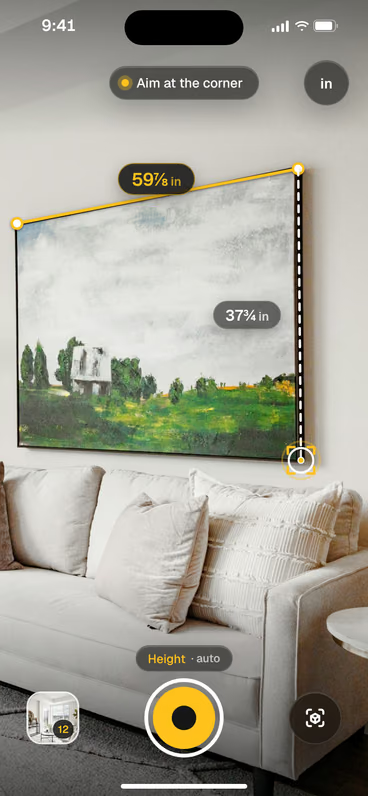
End to end, in two taps. Aim at one end of the wall and tap, then the other. TapePal shows the length in feet and inches; measure the height the same way, multiply, and you have the square feet for your block count.

Questions
Are cinder blocks and concrete blocks the same size?
Yes. True cinder blocks were made with coal cinders in the mix; nearly every block sold today is a concrete block, also called a CMU (concrete masonry unit). The sizes are the same, and most people use the two names for the same thing.
How many cinder blocks are in a square foot of wall?
1.125. Each block with its joint covers 8 × 16 in, which is 128 sq in, or about 0.89 sq ft. That is 112.5 blocks per 100 sq ft of wall, plus a few extra for cuts and breaks.
What does 8 × 8 × 16 mean?
Width × height × length, in inches, by name. The first number is the thickness of the wall the block makes, so a 6 × 8 × 16 block builds a 6 in wall.
How much does a cinder block weigh?
A standard 8 × 8 × 16 hollow block weighs roughly 30 to 40 lb, depending on the concrete mix; lightweight blocks are at the low end. The maker's product sheet gives the exact figure.
How tall is a wall of cinder blocks?
8 in per course, joint included. 3 courses make 2 ft, 6 courses 4 ft and 12 courses 8 ft.
How we checked this. Nominal and specified (actual) sizes follow the Concrete Masonry & Hardscapes Association's CMU-TEC-001-23 (CMHA, formerly NCMA) for units made to ASTM C90: the specified size is the nominal size minus a ⅜ in mortar joint. A maker's sheet such as Basalite's lists the 8 × 8 × 16 block at 7⅝ × 7⅝ × 15⅝ in. Blocks per square foot are worked out from the 8 × 16 in nominal face. Weights vary by maker and mix, so check the product sheet. Read 26 Nov 2026. Reviewed by the TapePal team on .