2x4 actual size: 1½ × 3½ in, and every lumber size
The actual size of a 2x4 is 1½ × 3½ in. A 2x6 is 1½ × 5½, a 2x8 1½ × 7¼, a 2x10 1½ × 9¼ and a 4x4 3½ × 3½ in. Why the names are bigger, with a chart.
 By the TapePal teamUpdated 3 min read
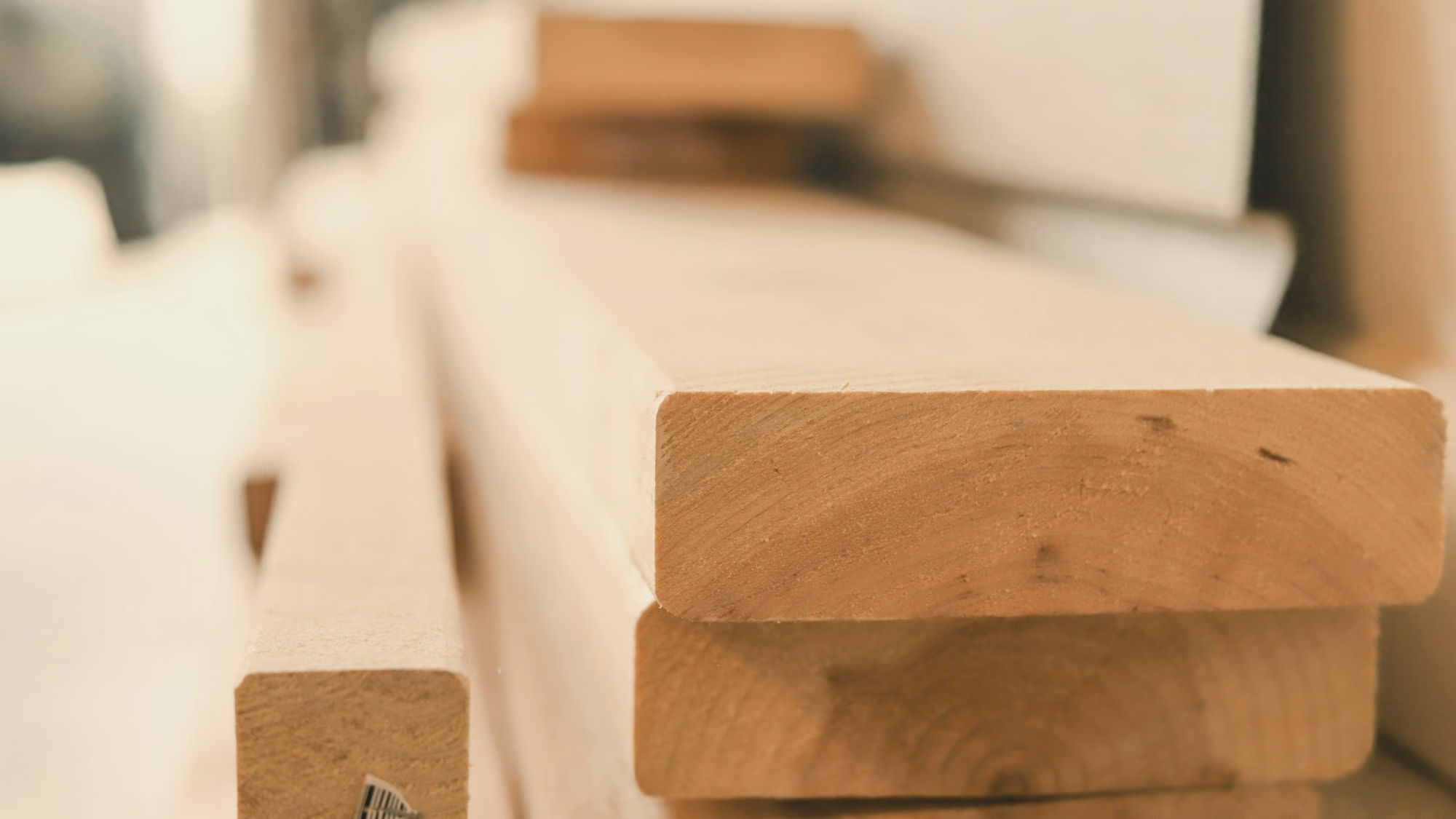
Short answer
1½ × 3½ in is the actual size of a 2x4, ½ in smaller each way than its name. Every board is smaller than it is called: a 2x8 is 1½ × 7¼ in and a 4x4 is 3½ × 3½ in (dry sizes in PS 20, the American Softwood Lumber Standard).
What are the actual sizes of lumber?
| Name | Actual size | Used for | cm |
|---|---|---|---|
| 2x4 | 1½ × 3½ in | Wall studs | 3.8 × 8.9 |
| 2x6 | 1½ × 5½ in | Outside walls, deck boards | 3.8 × 14.0 |
| 2x8 | 1½ × 7¼ in | Floor and deck joists | 3.8 × 18.4 |
| 2x10 | 1½ × 9¼ in | Joists, stair stringers | 3.8 × 23.5 |
| 2x12 | 1½ × 11¼ in | Stair stringers, beams | 3.8 × 28.6 |
| 4x4 | 3½ × 3½ in | Posts | 8.9 × 8.9 |
An easy rule: up to 6 in, take ½ in off the name. From 8 in up, take ¾ in off. So a 2x6 is 5½ in wide and a 2x10 is 9¼ in.
Why is a 2x4 smaller than 2 × 4 in?
The name is the board’s nominal size, roughly what it measures when it is first sawn from the log. The board is then dried, which shrinks it, and planed smooth on all four sides. What is left is 1½ × 3½ in.
PS 20, the American Softwood Lumber Standard, sets these sizes, so a 2x4 from one store matches a 2x4 from another. Very old houses can have bigger boards, so measure before you match an old wall.
Concrete blocks are named the same way, for a different reason: an 8 × 8 × 16 cinder block is 7⅝ × 7⅝ × 15⅝ in, leaving room for the mortar joint.
What about boards and posts?
Thinner boards, called 1x, follow the same idea. They are ¾ in thick.
| Name | Actual size | cm |
|---|---|---|
| 1x2 | ¾ × 1½ in | 1.9 × 3.8 |
| 1x4 | ¾ × 3½ in | 1.9 × 8.9 |
| 1x6 | ¾ × 5½ in | 1.9 × 14.0 |
| 1x8 | ¾ × 7¼ in | 1.9 × 18.4 |
| 2x3 | 1½ × 2½ in | 3.8 × 6.4 |
| 4x6 | 3½ × 5½ in | 8.9 × 14.0 |
Setting a 4x4 for a curbside mailbox? Mailbox height has the USPS post and height rules.
How long is a 2x4?
Lengths are true to the name: an 8 ft 2x4 (a 2x4x8) is 96 in, a 10 ft one 120 in. Precut studs are the exception. They are cut short, often 92⅝ in, so that with the plates at top and bottom the wall comes out right for an 8 ft ceiling.
Trim and boards are often priced by the linear foot, the length alone. Hardwood is sold by the board foot, a volume figured on the name size: an 8 ft 2x4 is 5⅓ board feet.
How do you measure a board?
- Measure the thickness Hold the tape across the narrow face of the board, edge to edge. A 2x board should read 1½ in.
- Measure the width Measure across the wide face. A 2x4 reads 3½ in, a 2x6 5½ in, a 2x8 7¼ in.
- Measure the length Measure end to end. Lengths are not reduced: an 8 ft board is 96 in. Precut studs are the exception.
Building in block instead? A cinder block works the same way: sold as 8 × 8 × 16 in, it really measures 7⅝ × 7⅝ × 15⅝ in. Buying firewood, the unit is volume: a full cord of wood is a stack 4 × 4 × 8 ft.
Can your iPhone measure it?
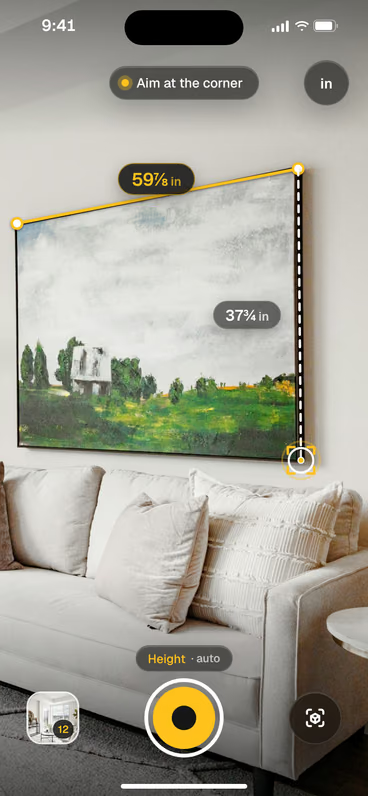
End to end, in two taps. Aim at one end of the board and tap, then the other. TapePal shows the length in feet and inches, so you can check a board before you cut it.

Questions
Why has the 2x4 gotten smaller?
The dry size has been cut over the years as the US lumber standard was revised, down to today's 1½ × 3½ in under PS 20. Boards in an old house can be bigger, so measure before you match one.
What is the actual size of a 2x6?
1½ × 5½ in, or 38 × 140 mm.
What is the actual size of a 1x4?
¾ × 3½ in. Every 1x board is ¾ in thick: a 1x6 is ¾ × 5½ in.
Is green lumber a different size?
It is a little bigger, because it hasn't dried yet. A green 2x4 is 1 9/16 × 3 9/16 in under PS 20, and shrinks toward the dry size.
How we checked this. Sizes are the dry dressed sizes in PS 20-25, the American Softwood Lumber Standard, also in the SFPA size table; dry means 19% moisture or less. Metric sizes are the inch sizes converted at 25.4 mm to the inch. Read 26 Nov 2026. Reviewed by the TapePal team on .