How to measure for a storm door or new door
To measure for a storm door, take 3 widths inside the brickmould and 2 heights from the sill, and keep the smallest. Most are 32 or 36 in wide.
 By the TapePal teamUpdated 5 min read
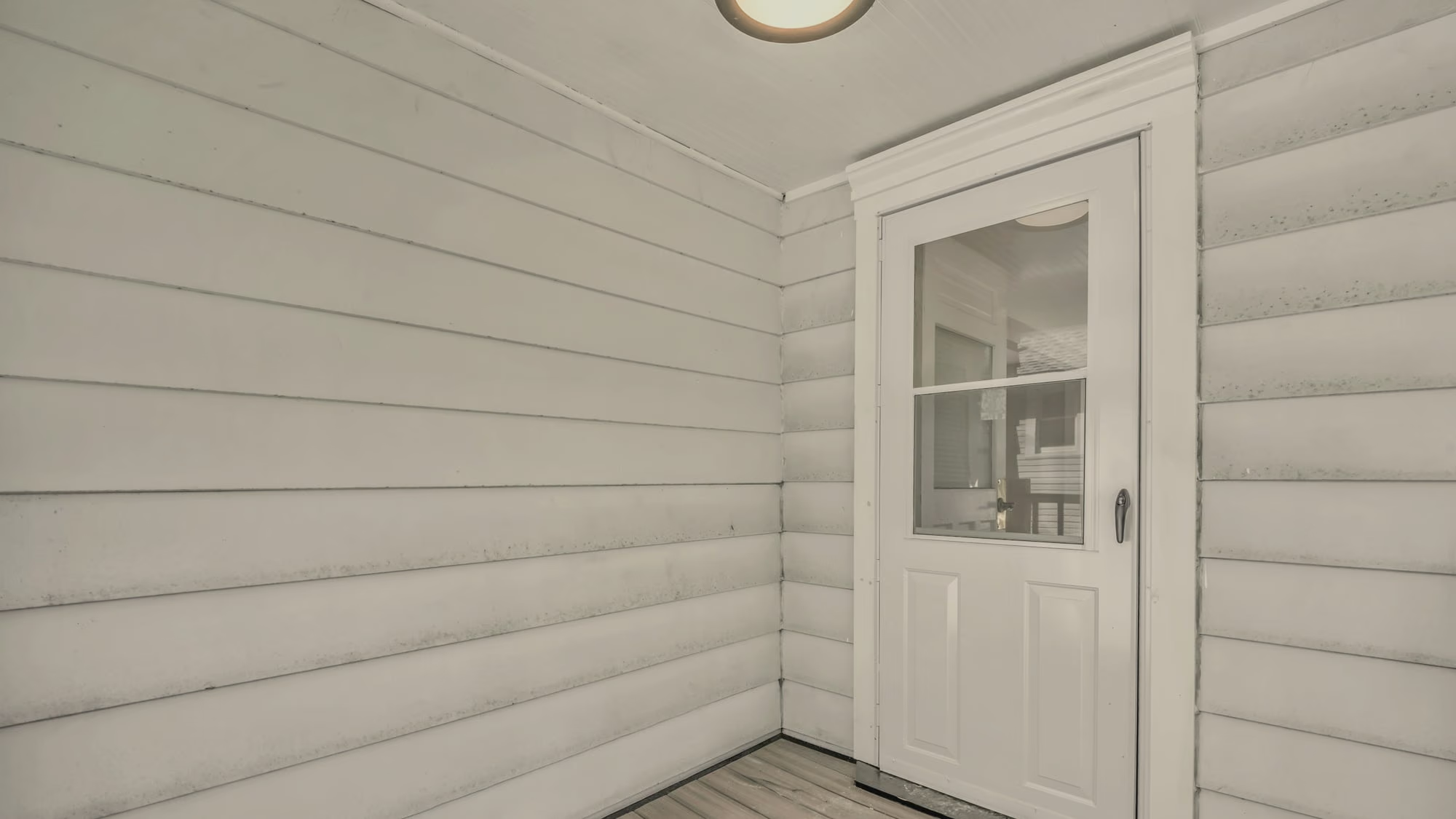
Short answer
Measure 3 widths and 2 heights, and keep the smallest. For a storm door, measure the width inside the brickmould at the top, middle and bottom, and the height from the sill to the underside of the top brickmould. Most storm doors are made for openings about 32 or 36 in wide and 80 to 81 in tall.
How do you measure for a storm door?
Take three widths inside the brickmould and two heights from the sill, and keep the smallest of each. A storm door has to fit the tightest spot in the opening.
| What | Where you measure | Keep or expect | cm |
|---|---|---|---|
| Storm door width | Inside the brickmould: top, middle, bottom | Smallest; most fit 32 or 36 in | 81 or 91 |
| Storm door height | Sill to underside of the top brickmould, left and right | Smaller; most fit 80–81 in | 203–206 |
| Door size | The old door: edge to edge, top to bottom | For example 36 × 80 in | 91 × 203 |
| Door thickness | The edge of the door | 1⅜ in inside, 1¾ in outside | 3.5 or 4.4 |
| Rough opening | Stud to stud and floor to header, trim off | Usually about 2 in wider and 2½ in taller than the door | +5 and +6.4 |
- Measure the width 3 times Outside the house, measure across the opening between the inside edges of the brickmould at the top, middle and bottom. Write down the smallest, to the nearest 1/16 in.
- Measure the height twice Measure from the sill up to the underside of the top brickmould on the left and on the right. Write down the smaller one.
- Note the hinge side Stand outside, facing the door, and decide which side you want the hinges on. Write it down with the size, width first.
The brickmould is the trim around the outside of the door frame. The storm door’s frame screws onto it, so that is where the size comes from, not the entry door itself. Write the size as width × height, in that order.
Which way should the storm door open?
Decide the hinge side from outside the house. Andersen says handing should always be set from outside: stand facing the door and pick whether the hinges go on the left or the right. Think about where you stand when you open it, and where the door will swing.
Makers name handing in different ways, so use the words on the order form, not a rule of thumb. Some storm doors, like Andersen’s Rapid Install 2 models, can hang either way.
What else should you check before you order?
Check the trim, not just the size. Andersen asks for at least:
- ¾ in of flat trim face around the opening, for the storm door frame to sit on.
- 1 in of brickmould depth.
- 2½ in of door frame (jamb) depth, so the storm door clears the entry door’s handle.
Measure the two diagonals of the opening too, corner to corner. If they don’t match, the frame is out of square, and the smallest width matters even more.
How do you measure a door for replacement?
It depends on what you replace. For a slab (just the door), measure the old door: its width edge to edge, its height top to bottom, and its thickness at the edge. Interior doors are usually 1⅜ in thick and exterior doors 1¾ in. Every common size is in standard door sizes. For a bifold, sliding, pocket or barn door, see closet door sizes: a barn door has to be 2 to 4 in wider than the opening.
For a pre-hung door (door and frame together), take the inside trim off and measure the rough opening, the hole in the wall framing. Masonite’s guide says:
- Width: stud to stud at the top, center and bottom. Keep the smallest, to the nearest 1/16 in.
- Height: floor to the header at the left, center and right. Keep the smallest.
- Jamb depth: from the inside face of the wall to the outside face. Common depths are 4 9/16, 5¼ and 6 9/16 in.
A rough opening is usually about 2 in wider and 2½ in taller than the door, but the maker lists the exact size for each door.
Which hand is my entry door?
For an entry door, Masonite says to stand in the doorway with your back to the hinges. If the handle is on your right, it is a right-hand door. If it is on your left, it is a left-hand door. Then note whether it swings in (into the room you enter) or out.
Moving furniture, not buying a door? You need the clear opening between the door stops instead. That is in how to measure a doorway.
Can your iPhone measure it?
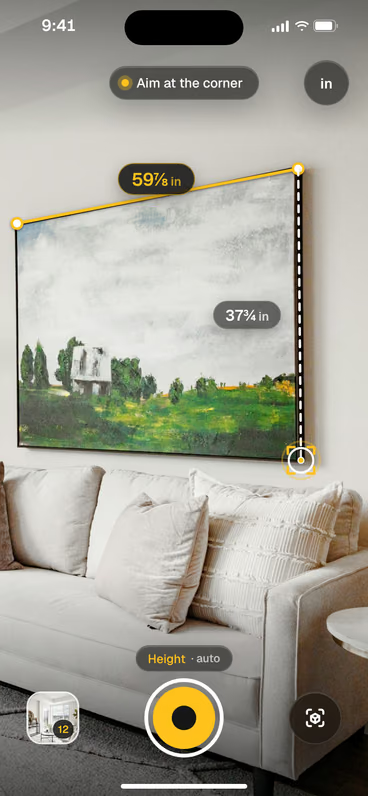
Side to side, in two taps. Aim at one edge of the opening and tap, then aim at the other edge and tap again. TapePal gives the width in inches and saves it with the photo. Check the tightest spot with a tape before you order.

Questions
What size storm door do I need for a 36 in front door?
Usually a 36 in storm door. Larson lists its 36 in doors for openings about 35⅞ to 36⅜ in wide. Measure your opening anyway: the brickmould, not the door, sets the size.
Do I measure the old storm door or the opening?
The opening. An old storm door may have been the wrong size or trimmed to fit. Take it off, or measure behind it, inside the brickmould.
What if my opening falls between two sizes?
Check the maker's size chart first: standard storm doors cover a range of about ½ in. If your smallest width or height is outside every range, you need a custom-size door.
Should I round my measurements?
No. Write the smallest reading as it is, to the nearest 1/16 in, and let the maker's chart tell you which size fits.
How we checked this. Storm door measuring points (width inside the brickmould at the top, center and bottom, height from the sill to the underside of the brickmould) and the minimum ¾ in flat trim, 1 in brickmould depth and 2½ in jamb depth are from Andersen's storm door installation guide, which also says to set handing from outside the home. Standard storm door widths (32 and 36 in, some 30 and 34 in), heights of 80 to 81 in and the 35⅞ to 36⅜ in range for a 36 in door are from Larson's measuring guide and catalog. Rough opening readings, jamb depths and entry door handing are from Masonite's measuring guide. Door thicknesses and the rough-opening allowance match our standard door sizes guide. Reviewed by the TapePal team on .