1/16 inch = 0.0625 in (1.6 mm) on a tape measure
1/16 = 0.0625 in, or 1.6 mm. On a tape measure it is the first, shortest line after each inch mark. How to find it, what it looks like and when it matters.
 By the TapePal teamUpdated 3 min read
Short answer
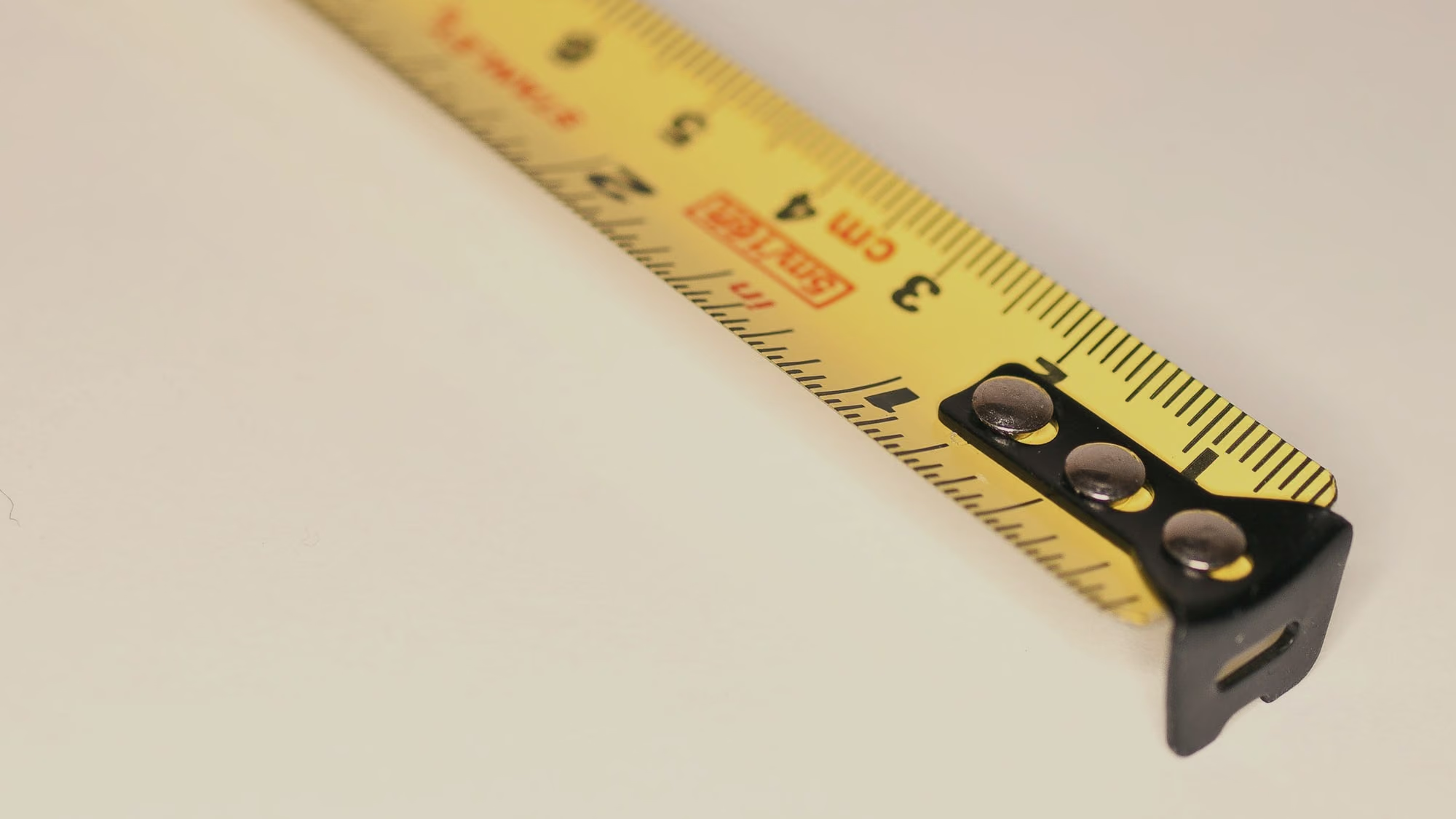
1/16 in is the shortest line on most US tapes, the first one after each inch mark: 0.0625 in, or 1.6 mm. Every line on the tape is a count of sixteenths, so 1/16 is the step everything else is built from.
Where is 1/16 on a tape measure?
1/16 on a tape measure is the first line after any inch number, and the shortest line on the blade: 0.0625 in past the inch. There are 15 of these lines between two inch numbers. Some are drawn longer because they also mark an eighth, a quarter or the half, but each one is another 1/16 in.
- Find the inch Start at the inch number your edge is past, say 3.
- Look for the shortest line The very next line, the shortest one on the blade, is 1/16 in past the 3.
- Read it One short line after the 3 reads 3 1/16 in.
What fractions are near 1/16?
| Fraction | Sixteenths | Decimal | Millimeters |
|---|---|---|---|
| 1/32 | 1/2 of 1/16 | 0.03125 | 0.8 |
| 1/16 | 1/16 | 0.0625 | 1.6 |
| 1/8 | 2/16 | 0.125 | 3.2 |
| 3/16 | 3/16 | 0.1875 | 4.8 |
| 1/4 | 4/16 | 0.25 | 6.4 |
Any reading on a tape is a whole number of sixteenths. Count the lines past the inch and put the count over 16: three lines is 3/16 on a tape measure, seven is 7/16 on a tape measure, and ten lines is 10/16, which you can shorten to 5/8. Six lines, 6/16, shortens to 3/8. A US ruler is marked the same way: see how to read a ruler.
How big is 1/16 of an inch?
1/16 in is 0.0625 in, or about 1.6 mm, a little more than the thickness of two bank cards stacked together. A standard card is 0.76 mm thick, so two make about 1.5 mm. You can see it, but only just, which is why the 1/16 lines are packed so tightly on the blade.
When does 1/16 inch matter?
It depends on the job. A picture hook or a shelf bracket won’t notice 1/16 in. A miter joint in trim will show it as a visible gap, and cabinet doors set 1/16 in out of line can look crooked side by side.
Tile is one place a standard names it. ANSI A108.02 says a grout joint should never be narrower than 1/16 in, even with the most precise tiles. Wider tiles and patterns often need more: see 3/16 on a tape measure.
Can your iPhone read it for you?
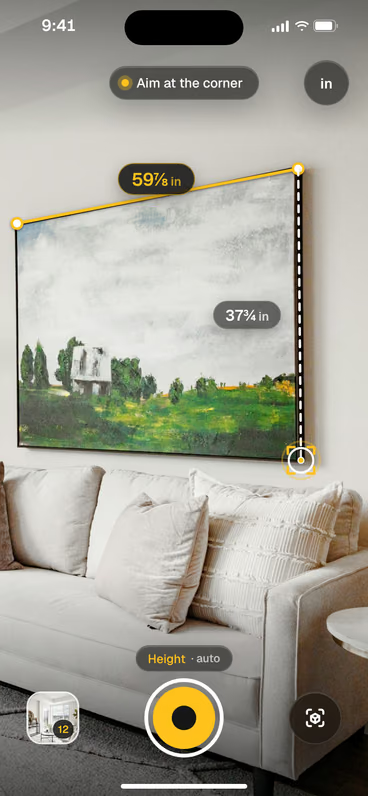
Point, tap, read. Aim at each end and tap. TapePal shows the length in feet, inches and fractions, down to 1/16 in.

Questions
What does 1/16 equal?
1/16 = 0.0625. As a length, 1/16 in = 0.0625 in = 1.6 mm, and 16 sixteenths = 1 in.
What does 1/16 of an inch look like?
A gap about as thick as two bank cards stacked together. On a tape it's the space between two neighboring lines, and the shortest line on the blade marks it.
What is 1.6 on a tape measure?
1.6 mm is 1/16 in, the first, shortest line after an inch mark. If your tape is marked in tenths of an inch instead, 1.6 is 1 in plus 6 tenths, just under 1 5/8 in.
What does 1/16 mean?
One sixteenth: one of 16 equal parts, 0.0625 as a decimal. On a tape measure, 1/16 in is the shortest line, and 16 of them make an inch.
How many sixteenths are in an inch?
16. That's why the 1 in mark is also 16/16, the half is 8/16 and the quarter is 4/16.
Is 1/16 smaller than 1/8?
Yes, it's half of 1/8. Two sixteenth lines make one eighth.
What is 1/16 as a decimal?
0.0625 in.
Do all tapes have 1/16 marks?
Most US tapes mark every 1/16 in. Some also mark 1/32 in along the first 12 in, for finer work.
How we checked this. 1/16 in is exactly 0.0625 in. Millimeters use 1 in = 25.4 mm, rounded to 0.1 mm. Card thickness is the ISO/IEC 7810 ID-1 size, 0.76 mm. The minimum grout joint is from ANSI A108.02, the US tile installation standard, as summarized by the Ceramic Tile Education Foundation. Reviewed by the TapePal team on .