2-car garage dimensions: 20 × 20 to 24 × 24 ft
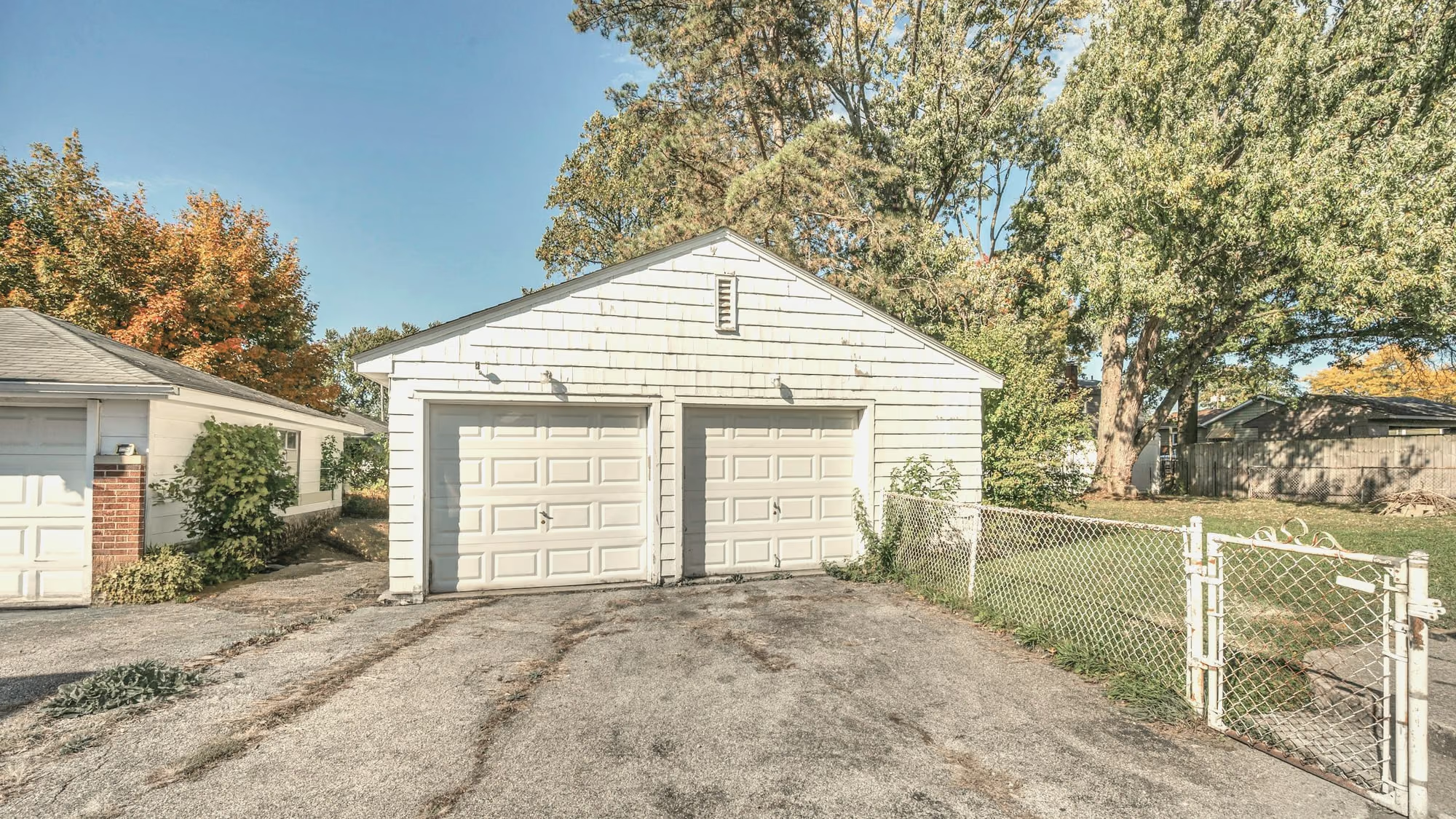
2-car garage dimensions run from 20 × 20 ft, the minimum, to 24 × 24 ft for room to open doors. 1-car garages are about 12 × 22 ft, 3-car about 32 × 22 ft.
 By the TapePal teamUpdated 5 min read
Short answer
20 × 20 ft is about the smallest 2-car garage, and 24 × 24 ft gives two cars room to open their doors and walk around. A 1-car garage is about 12 × 22 ft, and a 3-car garage about 32 × 22 to 36 × 24 ft.
How big is a 2-car garage?
A 2-car garage is usually 20 to 24 ft wide and 20 to 24 ft deep. 20 × 20 ft is about the smallest that holds two cars, 22 × 22 ft is common, and 24 × 24 ft leaves room to open the doors, walk around the cars and keep a few bins along the wall.
| Garage | Width × depth | Area | Door | In meters |
|---|---|---|---|---|
| 1-car | 12 × 20 to 14 × 24 ft | 240–336 sq ft | One 8 or 9 ft | 3.7 × 6.1 to 4.3 × 7.3 |
| 2-car, minimum | 20 × 20 ft | 400 sq ft | One 16 ft or two 8 ft | 6.1 × 6.1 |
| 2-car, common | 22 × 22 ft | 484 sq ft | One 16 ft or two 9 ft | 6.7 × 6.7 |
| 2-car, roomy | 24 × 24 ft | 576 sq ft | One 16 ft or two 9 ft | 7.3 × 7.3 |
| 3-car | 30 × 20 to 36 × 24 ft | 600–864 sq ft | 16 ft plus 9 ft, or three 9 ft | 9.1 × 6.1 to 11 × 7.3 |
Sizes are given width first, across the door wall, then depth. They are inside the walls: the outside of the building is about 1 ft bigger each way.
What is the standard garage size?
There is no national standard. Your city or county sets the minimum in its zoning code, and builders work to a few common sizes:
- 1-car garage: about 12 × 22 ft, with one 8 or 9 ft door. 10 × 20 ft is a common code minimum, but it leaves little room beside the car.
- 2-car garage: 20 × 20 to 24 × 24 ft, with one 16 ft door or two singles.
- 3-car garage: about 32 × 22 to 36 × 24 ft, often a 16 ft door and a 9 ft door side by side.
A tandem garage puts the second car behind the first instead: about 12 ft wide and 36 to 40 ft deep.
Will your car fit in the garage?
Leave about 3 ft between the cars and 2 to 3 ft between a car and the wall, so the doors open. In depth, leave about 3 ft to walk around the front or back.
| Vehicle | Length | Width | Depth to walk around | In meters (L × W) |
|---|---|---|---|---|
| Midsize sedan | About 16 ft | About 6 ft | 20 ft or more | 4.9 × 1.8 |
| Midsize SUV | About 15–16½ ft | About 6–6½ ft | 20 ft or more | 4.6–5 × 1.8–2 |
| Full-size SUV | About 17–19 ft | About 6¾ ft | 22 ft or more | 5.2–5.8 × 2.1 |
| Full-size crew-cab pickup | About 19–20½ ft | About 6⅔ ft | 24 ft or more | 5.8–6.2 × 2 |
Mirrors add about 6 to 12 in to the width. A full-size pickup is the car that most often doesn’t fit: it is longer than a 20 ft garage, so check the depth before you build or buy. Your vehicle’s exact size is in the owner’s manual or on the maker’s site.
How tall is a garage?
Most garage ceilings are 8 to 10 ft high. A 7 ft door is standard, and the opener and the open door hang under the ceiling, so 8 ft is about the lowest that works. 9 or 10 ft leaves room for overhead storage racks above the open door, and a car lift needs about 12 ft.
How much clearance does a garage door need?
Beyond the door opening itself, the garage needs room for the tracks, springs and opener:
- Side room: at least 3¾ in of wall on each side of the opening.
- Headroom: about 15 in above the opening for most doors with an opener.
- Back room: the door height plus 18 in, or plus 50 in with an opener. For a 7 ft door with an opener, that is about 11 ft 2 in back from the opening.
These are Amarr’s figures for most doors; the door’s install guide has the exact numbers. Door widths and heights are in garage door sizes.
How do you measure a garage?
- Measure the width Measure the inside from wall to wall at the floor, and again at the height of a car door. Use the smaller number, and note steps, a water heater or shelves that stick out.
- Measure the depth Measure from the inside of the garage door to the back wall, at the floor and at hood height. A workbench or a step into the house comes off this number.
- Measure the height Measure from the floor to the lowest thing overhead: the opener, the door track or a beam. Then measure your car's length, width with the mirrors out, and height with anything on the roof.
Write the width first, then the depth, in feet and inches. To get the area, multiply them: our square footage guide shows how, odd shapes included.
Can your iPhone measure it?
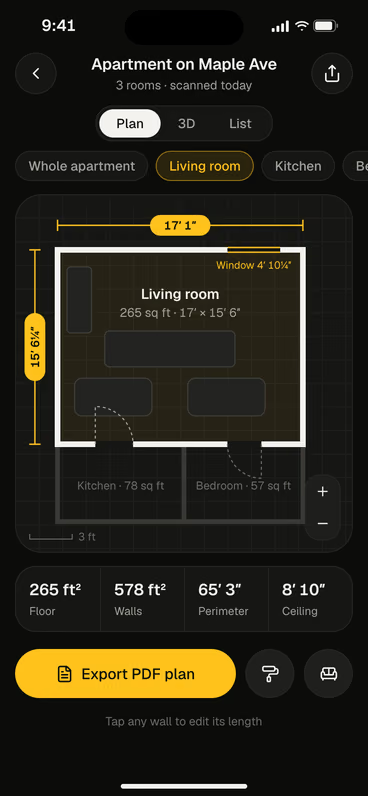
The whole garage, in one walk. Walk around the garage and TapePal draws the floor plan with every wall measured. LiDAR iPhones scan it live; on other iPhones you tap the floor corners. Export the plan as a PDF for your builder, or a DXF for CAD.

Questions
How many square feet is a 2-car garage?
About 400 to 576 sq ft: 400 sq ft for a 20 × 20 ft garage, 484 for 22 × 22 ft and 576 for 24 × 24 ft.
Is a 20 × 20 ft garage big enough for 2 cars?
For two midsize cars, yes, but tightly. Two cars about 6 ft wide leave about 8 ft across for the gaps beside and between them, so you open the doors with care. A full-size pickup is too long for a 20 ft deep garage.
What size is a 2.5-car garage?
There is no set size. Builders use the name for a 2-car garage with extra width, usually about 26 to 30 ft wide, with room for a workbench, a motorcycle or a mower.
How tall is a garage ceiling?
Usually 8 to 10 ft. 8 ft is enough for the door and opener, 9 or 10 ft leaves room for overhead storage, and a car lift needs about 12 ft.
How we checked this. Garage sizes are the typical ranges US builders and house plan sites work to; there is no national size, and local zoning codes set the minimum. Door sizes are from Clopay's garage door buying guide for The Home Depot and Amarr's garage door sizing guide, and side room, headroom and back room from Amarr's guide to measuring for a new garage door. Car sizes are typical ranges for each class, without mirrors; check your vehicle's spec sheet. Read 26 Nov 2026. Reviewed by the TapePal team on .